How Coaches Shape Success in Basketball Club Teams San Diego
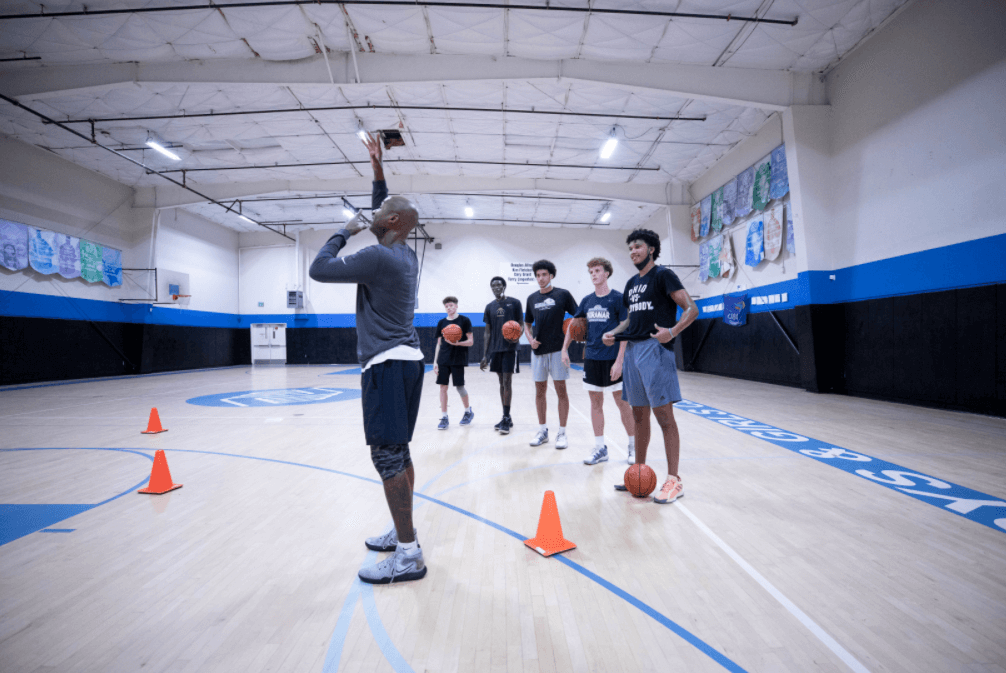
Walk into any competitive youth gym in San Diego on a weekend and the first thing you notice is not just the speed of the games. It is the sideline rhythm. A coach crouches low during a defensive possession, eyes fixed on weak-side help. Another calls out matchups before the ball crosses half court. A third says very little at all, then stops play between quarters to correct one foot angle that keeps ruining a closeout. Talent matters in club basketball. Size matters. Timing, repetition, and confidence matter. But over the course of a season, the factor that often separates a promising team from a truly successful one is coaching.
That reality becomes even clearer in the club setting. Unlike school basketball, club teams are often assembled from different neighborhoods, schools, and social circles. Players may arrive with wildly different habits, expectations, and skill levels. Some have polished ballhandling and poor defensive instincts. Others are tough, unselfish, and raw. Some families want exposure and competition. Others want structure, growth, and the right environment. Coaches stand in the middle of all of it. They shape not just the playbook, but the culture that allows young athletes to improve together.
When parents search for Basketball Club Teams San Diego, they often start by comparing schedules, travel commitments, tournament calendars, and reputations. Those details matter, but they do not tell the whole story. A club can have access to good gyms and still fail to develop players. It can enter high-profile events and still leave athletes stagnant. The difference usually comes down to what happens in practice, during film review, inside huddles, and in quiet moments after mistakes. That is where coaching leaves its mark.
Coaching in club basketball is different from school basketball
Club coaching asks for a particular kind of flexibility. In school programs, coaches often have months with the same group and a shared institutional identity already in place. In the club world, continuity is harder to build. Teams may practice fewer times each week, then compete heavily on weekends. Rosters can shift from season to season, and sometimes within the year. Players come from different systems and bring different terminology with them.
A strong club coach does not waste weeks pretending those differences do not exist. Instead, the coach creates a common basketball language early. That may sound simple, but it is one of the most important jobs in the first month of a season. If one player hears “ice” and https://wayloneesx902.raidersfanteamshop.com/keys-to-success-with-basketball-club-teams-san-diego thinks force baseline while another thinks trap the side ball screen, the defense will crack. If “lift” means drifting to the slot for one player and cutting through for another, spacing will collapse.
Good coaches simplify first, then layer complexity. They understand that club players need clarity before they need sophistication. In practical terms, that often means starting with defensive shell principles, transition spacing, and half-court reads that can survive game pressure. Fancy sets impress people in a notebook. Reliable habits win games in the fourth quarter.
This matters a great deal in San Diego, where the basketball landscape is broad and competitive. The region includes athletes from different school traditions, private training backgrounds, and varying levels of year-round play. The best coaches adapt to the player pool in front of them rather than forcing every roster into the same rigid mold.
Skill development is where coaches earn trust
Parents often judge a coach by wins. Players usually judge a coach by whether they are getting better. Over time, the second measure is more revealing.
Club basketball should be a development environment first, even at high levels. That does not mean ignoring competition. It means understanding that long-term success is built through daily improvement. Coaches who shape successful teams know how to teach skill work in a way that translates to live games. There is a major difference between running players through pretty drills and building usable basketball skill.
A player might make 80 stationary pull-up jumpers in a workout. That sounds productive. Then she enters a game, gets chased off a handoff, feels contact at her hip, and never gets to her spot cleanly. If practice has not prepared her for pace changes, angles, and decisions, the shooting work has limited value. The same is true for ballhandling. Two-ball rhythm drills have their place, but club coaches earn credibility by connecting handle work to pressure pickups, retreat dribbles, split moves, and reads against a second defender.
The coaches who consistently improve players usually focus on details that do not always stand out from the bleachers. They correct footwork on finishes. They teach how to receive a pass already loaded into the shot. They insist on seeing the second line of defense, not just the primary defender. They show post players where the catch must happen, not just how the move should look after the catch. Their practices are less about volume and more about transfer.
I have seen teams make dramatic jumps in a season because of small teaching choices. One 15U girls team in Southern California struggled early because its guards picked up the dribble too soon against pressure. The coach spent three weeks building every backcourt drill around escape dribbles, reverse pivots, and advancing the ball with quick outlets instead of hero dribbles. The change did not produce highlights. It produced cleaner possessions, fewer turnovers, and eventually more confidence late in games. That is coaching shaping success in a real, measurable way.
Team identity does not appear by accident
Every strong club team develops a personality. Sometimes it is obvious, a relentless transition group that defends baseline to baseline. Sometimes it is more subtle, a disciplined half-court team that rarely beats itself. Either way, that identity almost always reflects coaching.
Team identity is more than slogans on warmup shirts. It is the set of standards players can feel. Do they sprint into help? Do they talk on every switch? Do they know the quality of shot the team wants? Do they celebrate the extra pass as much as the made three? These patterns come from repetition and accountability.
In Basketball Club Teams San Diego, where tournament weekends can pack several games into a short span, identity becomes especially valuable. Legs get heavy. Shots stop falling. The team that relies only on emotion often fades. The team that knows exactly how it wants to defend, rebound, and execute under stress has something solid to return to.
Coaches shape this identity by deciding what they will praise, what they will stop, and what they will let slide. That last part matters more than many people admit. Players are quick studies. If a coach talks constantly about toughness but never addresses poor box-outs, the message rings hollow. If a coach claims to value teamwork but rewards forced scoring possessions without correction, players will adjust to that reality.
The best coaches understand that culture is built through consistency. A single fiery speech rarely changes a team. Repeated standards do.
Game management goes far beyond drawing up plays
From the stands, coaching can look like substitutions and timeouts. Those are visible, but they are only part of the job. Real game management includes anticipating momentum swings, reading matchups, and understanding which adjustments a young team can actually carry out under pressure.
Consider a common club scenario. Your team starts cold, the opponent extends pressure, and two primary ballhandlers look rattled. A coach has choices. Slow the game and put in a steadier lineup. Flash a forward to the middle and play through the press. Use a timeout early to settle nerves. Or, if the roster can handle it, let the players solve the first wave themselves and build resilience. None of these choices is universally right. Good coaches make the right choice for that team, that age group, and that moment.
That judgment separates experienced coaches from coaches who simply know basketball concepts. Knowing what a Spain pick-and-roll is does not mean knowing when a 14U group can run it cleanly in the final two minutes. Success in club basketball often comes from narrowing options, not expanding them. Young athletes perform better when the plan in pressure moments is clear and rehearsed.
The same principle applies defensively. Some coaches love switching everything because it simplifies certain actions. Others prefer aggressive hedge-and-recover schemes that preserve size matchups. In youth club basketball, the answer often depends on communication maturity more than tactical preference. A switching system sounds simple, but it can create confusion if players do not tag rollers, scram mismatches, or rebound out of cross-matches. Strong coaches know the hidden costs of every system they install.
Coaches also shape the emotional climate
Basketball is emotional even for adults. For teenagers, it can feel overwhelming. One bad weekend can shake confidence. A benching can linger for days. A rough shooting stretch can alter body language for a month if no one addresses it well. Club coaches influence how players interpret those moments.
The most effective coaches are demanding without becoming unstable. They correct hard, but they do not humiliate. They know when a player needs direct accountability and when she needs a simple reset. This balance is harder than it looks. Too much softness and standards erode. Too much volatility and players start performing scared.
That emotional climate affects development more than many families realize. Confident players absorb instruction better. They compete more freely. They recover faster from mistakes. A coach who creates psychological safety without lowering expectations gives athletes room to grow. In practice, that may mean allowing mistakes during teaching phases but requiring precision during competitive segments. It may mean meeting privately with a struggling player instead of criticizing her publicly in front of peers.
San Diego’s club circuit can be intense. Tournament schedules are crowded, social media raises visibility, and players often compare roles across teams. Coaches who manage those emotional pressures well protect both performance and retention. Families stay where communication is clear and growth feels real.
Playing time is one of the hardest coaching responsibilities
No issue creates more tension in club basketball than playing time. This is where coaching philosophy becomes visible very quickly.
In developmental age groups, many families reasonably expect meaningful opportunities to play, learn, and improve through game reps. At older, more competitive levels, roles naturally tighten, especially in bracket play. A capable coach communicates that reality early. Problems usually do not start with limited minutes. They start with unclear expectations.
Coaches shape success when they connect playing time to teachable criteria rather than mystery. If a player understands that defense, rebounding effort, floor balance, and decision-making affect her role, she has a path forward. If she believes minutes are arbitrary, trust dissolves.
This does not mean every decision will feel fair to every family. It will not. But there is a big difference between difficult and careless. Thoughtful coaches make role decisions with purpose. They also revisit those decisions as players improve. Nothing crushes motivation like the sense that growth changes nothing.
For families evaluating Basketball Club Teams San Diego, this is one of the smartest areas to ask about. Not “Will my child start?” That question rarely helps. Better questions are about development plans, feedback loops, and how roles evolve over a season.
What strong coaches tend to do consistently
A few habits show up again and again among coaches who build successful club teams:
- They teach with precision, not volume.
- They define roles clearly, then revisit them.
- They build practices around game situations, not empty activity.
- They demand defensive accountability every session.
- They communicate directly with both players and parents.
None of these habits is glamorous. All of them matter. A practice can feel energetic and still be poorly structured. A coach can be charismatic and still fail to teach. The teams that improve most are usually led by coaches who value clarity over theatrics.
Parent communication can either strengthen or damage a program
Club basketball involves a three-part relationship between coach, player, and family. When those parts work together, development accelerates. When they work against one another, tension spreads fast.
Experienced coaches know that parent communication should be proactive. If tournament expectations, attendance standards, or playing time philosophy are not stated early, someone will fill in the blanks later. Usually with frustration. Strong programs do not eliminate disagreement, but they reduce confusion.
This is especially important in a city like San Diego, where families often choose from multiple club options within a manageable driving radius. A player may have access to different teams, trainers, and leagues. That creates choice, which is good, but it also creates noise. Coaches who communicate well help families focus on what actually matters: development, fit, and long-term progress.
There is also a practical side to this. Travel, practice schedules, school demands, and injury management all require adult coordination. Coaches who are organized off the court are usually more stable on it. Sloppy logistics often mirror sloppy program standards.
Great coaching includes knowing what not to push
One of the least appreciated parts of coaching is restraint. Not every player should be developed the same way at the same speed. Not every talented 13-year-old needs maximum tournament volume. Not every athlete benefits from playing through every minor issue.
In youth basketball, more is not always better. Extra games can expose weaknesses, but they can also mask the need for patient skill work. Coaches who understand development know when a player needs reps and when she needs rebuilding. A guard with poor shooting mechanics may need fewer rushed game possessions and more controlled technical work. A post player who dominates physically at a young age may need perimeter reads added before old habits harden.
Restraint also matters with injuries and fatigue. Club seasons can become crowded. When coaches ignore overuse, particularly in athletes balancing school seasons and private training, performance eventually drops. So does joy. Sustainable success requires judgment. The best coaches think beyond this weekend’s bracket.
The local environment in San Diego raises the standard
San Diego offers strong competition, varied talent, and year-round basketball opportunities, which creates both upside and pressure. Players can face high-level opponents without traveling far every week. Coaches can recruit from a broad area and work with athletes who have different strengths. But that same environment means weak coaching gets exposed quickly.
Teams that lack structure tend to unravel against disciplined opponents. Groups that rely on one scorer or one dominant ballhandler often struggle when scouting adjusts. In contrast, coaches who build complete habits, transition defense, help rotations, off-ball movement, end-of-game poise, usually see those habits hold up across a long season.
This is one reason successful Basketball Club Teams San Diego often develop a reputation that extends beyond their win-loss record. People notice which teams play the right way. High school coaches notice. Opposing parents notice. Players notice too. They can tell when a team is being taught rather than merely assembled.
How families can recognize coaching quality early
Families do not need to wait six months to understand whether a coach is helping a player grow. The signs appear quickly if you know where to look. Watch how practice time is used. Listen for specific instruction rather than generic shouting. Notice whether mistakes are corrected with purpose. Pay attention to whether athletes seem engaged, prepared, and aware of team concepts.
Here are a few useful indicators:
- Practices have structure and pace without feeling rushed.
- Players can explain team principles in simple terms.
- Corrections are specific, timely, and connected to game situations.
- Effort areas, defense, rebounding, spacing, communication, are clearly non-negotiable.
- The coach’s behavior is steady in both wins and losses.
These details reveal more than a social media highlight reel ever will. A gym full of noise can disguise weak teaching for a while. It cannot disguise it for long.
The best coaches leave players with more than better stats
Success in club basketball is often measured through offers, rankings, tournament finishes, and advancement to stronger levels. Those outcomes matter. But the deeper effect of coaching shows up in what players carry with them after the season.
A well-coached athlete usually becomes easier to coach later. She understands spacing, timing, and accountability. She can take correction without shutting down. She recognizes that defense is not punishment, but opportunity. She sees the game with more detail. These traits help not just in high school or college basketball, but in leadership, resilience, and self-management.
That is the lasting value of strong coaching. A coach shapes habits before highlights, judgment before applause, and confidence that is rooted in preparation rather than hype. On successful club teams, those qualities are rarely accidental.
For families and athletes evaluating options in San Diego, this is the lens worth using. The right coach will certainly want to win. Competitive people should. But the strongest coaches know that winning at the youth club level is not a separate goal from development. It is the byproduct of it. When players are taught carefully, challenged appropriately, and held to real standards, success has a way of showing up on the scoreboard too.
And when it does, everyone notices the players. The experienced eye notices the coach.
Lamont Smith Basketball Academy
888 Clairemont Mesa Blvd Suite T-2, San Diego, CA 92123
(619) 639-8778
FAQ About Basketball Club Teams San Diego
How can a player join an LSBA club team?
Players are evaluated during practices so the coaching staff can recommend an appropriate team and development level. Families should contact the academy to confirm current openings and evaluation details.
Are club teams available for newer basketball players?
Yes. LSBA describes multiple levels, including a developmental option for newer players as well as more competitive teams for athletes with prior club experience.
What do LSBA club team practices emphasize?
Practices emphasize basketball fundamentals, team defense, structure, communication, and player development. The specific focus may vary according to the team and experience level.
Do all LSBA teams travel?
Travel expectations vary by level. Some teams focus on local competition, while advanced teams may participate in tournaments elsewhere in Southern California or beyond. Families should confirm the current schedule before enrolling.